
Security in the workplace has always been a top priority, but traditional methods like passwords, swipe cards, and key codes are no longer enough. With cyber threats rising and the demand for seamless access growing, Biometric Authentication has become one of the most reliable solutions. From fingerprint scanners to facial recognition, biometrics are not just enhancing workplace security—they’re reshaping how employees access resources, data, and even physical spaces.
So, what’s next for biometri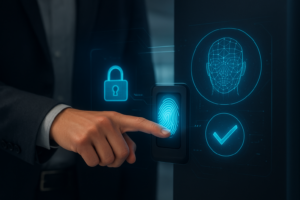 c authentication in the workplace? This article will explore its current applications, future trends, benefits, challenges, and what organizations need to know to stay ahead.
Understanding Biometric Authentication
Biometric Authentication is the process of verifying an individual’s identity using unique biological or behavioral characteristics. Unlike passwords or ID cards that can be lost, stolen, or shared, biometric identifiers are inherent to the individual.
Common examples include:
- Fingerprint Scanning – Still the most widely used biometric method.
- Facial Recognition – Increasingly popular for touchless access.
- Iris and Retina Scanning – Used in high-security environments.
- Voice Recognition – Useful for call centers and remote verification.
- Behavioral Biometrics – Patterns like typing speed, mouse movements, or gait.
Why Workplaces Are Moving Toward Biometrics
Traditional access methods have many flaws: forgotten passwords, stolen access cards, or shared login credentials. In contrast, biometric authentication offers:
- Higher Security: Biometric traits are extremely difficult to duplicate.
- Convenience: Employees don’t need to remember passwords or carry cards.
- Faster Access: Entry and logins are instant.
- Accountability: Ensures only authorized individuals access sensitive data.
For businesses handling sensitive data, intellectual property, or customer records, these advantages are critical.
Current Uses of Biometric Authentication in the Workplace
1. Access Control
Offices and secure facilities use fingerprint or facial recognition systems to grant entry.
2. Digital Security
Biometric logins for company devices, cloud platforms, and secure databases are becoming the norm.
3. Time and Attendance Tracking
Biometric attendance systems prevent “buddy punching” and ensure accurate employee records.
4. Remote Work Verification
For hybrid teams, biometric checks help confirm employee identity during remote logins.
Future Trends in Biometric Authentication
-
Multimodal Biometrics
Instead of relying on one identifier, future systems will combine multiple, such as fingerprint + facial recognition, making spoofing nearly impossible.
-
AI-Powered Biometrics
Artificial intelligence will improve accuracy by learning and adapting to changes like aging, lighting conditions, or background noise in voice recognition.
-
Contactless Biometrics
Post-pandemic, touchless solutions such as facial recognition and iris scanning are preferred for hygiene and convenience.
-
Biometrics for Behavioral Analysis
Workplaces may adopt continuous authentication through behavioral biometrics—monitoring typing patterns, physical gestures, or speech cadence.
-
Integration with Blockchain
Blockchain could store encrypted biometric data securely, reducing risks of data breaches.
Benefits of Biometric Authentication in Workplaces
- Enhanced Security: Reduces risks of hacking, phishing, or stolen credentials.
- Increased Productivity: Employees waste less time recovering passwords or resetting access.
- Cost Efficiency: Lowers expenses on access cards, key fobs, and IT support.
- Employee Trust: Builds confidence that sensitive data is protected.
- Regulatory Compliance: Helps companies meet data protection standards like GDPR and HIPAA.
Potential Challenges and Concerns
Despite its promise, biometric authentication isn’t without hurdles.
- Privacy Concerns: Employees may feel uneasy about storing biometric data.
- Data Breach Risks: If biometric data is hacked, it cannot be changed like a password.
- Implementation Costs: Advanced biometric systems may be costly to deploy.
- False Positives/Negatives: System errors can cause frustration and disrupt workflows.
- Legal & Ethical Considerations: Strict regulations govern biometric data collection and use.
The Role of Biometric Authentication in Hybrid Workplaces
With hybrid and remote work becoming the new norm, biometrics will play an increasingly vital role. Employees logging in from home or public networks need more than just passwords for secure access. Biometric Authentication ensures a seamless yet secure experience, protecting company data while supporting flexible work environments.
For instance, an employee working remotely may log in using a fingerprint scan on their laptop combined with facial recognition through a webcam. This dual verification guarantees strong security without compromising convenience.
The Future Outlook: What’s Next?
Looking ahead, biometric authentication in the workplace will likely evolve in these ways:
- Seamless Employee Journeys: Employees will use a single biometric profile for everything—from entering the building to logging into applications.
- Smart Integration with IoT Devices: Office devices like printers, smartboards, and meeting room systems could be secured via biometrics.
- Continuous Authentication Models: Instead of a one-time login, systems will verify employees continuously in the background.
- Wider Adoption Across Industries: From healthcare to banking, biometric authentication will become the standard for workplace security.
Practical Steps for Businesses Considering Biometrics
- Assess Security Needs: Understand whether you need biometrics for access control, digital systems, or both.
- Choose the Right Technology: Fingerprints may work for offices, while iris scans might suit high-security environments.
- Ensure Data Protection Compliance: Follow legal requirements for collecting, storing, and processing biometric data.
- Train Employees: Make sure staff are comfortable with and understand the purpose of biometrics.
- Plan for Backup Options: Always provide an alternative login method to avoid workflow disruptions.
Conclusion
The future of workplace security lies in Biometric Authentication. As businesses embrace digital transformation and hybrid work models, biometrics provide the perfect balance of security, convenience, and efficiency. While challenges like privacy and implementation costs exist, the benefits far outweigh the risks. Organizations that adopt biometric solutions today are setting themselves up for a future where workplace access is faster, safer, and smarter.